The safest way to clean baby toys is to use a non-toxic, fragrance-free cleaner that doesn’t require rinsing — especially for toys babies put in their mouths throughout the day.
If you’ve spent any time around babies, you already know this: everything goes in their mouth.
A toy gets dropped on the floor, picked back up, chewed on, tossed again — and the cycle repeats all day long. So when it comes to cleaning baby toys, it’s completely normal to wonder what’s actually safe to use.
The goal isn’t perfection. It’s choosing cleaning products that do the job without leaving behind harmful chemicals on things your baby is constantly touching — and tasting.
Here’s a simple approach to cleaning baby toys safely:
- Skip cleaners with bleach, quats, dyes, preservatives, ammonia, phthalates or other harsh chemicals
- Use fragrance-free cleaners, deodorizers, and disinfectants
- Choose no-rinse options for toys that go in your baby’s mouth
- Clean toys regularly rather than relying on stronger products
This simple approach keeps cleaning safe, realistic, and easy to stick to every day.
Why cleaning baby toys matters more than you think
Babies explore the world with their hands and their mouths. That means whatever you use to clean toys, teethers, and play surfaces can become part of what your baby is exposed to every day.
Studies have found that frequent exposure to cleaning products during pregnancy and early childhood is associated with a higher risk of asthma and respiratory issues later in life. Additional research shows that young children exposed to cleaning products may be more likely to develop asthma.
The real-life toy-cleaning moment every parent recognizes
If you’ve ever watched your baby drop a toy on the floor, pick it up, and immediately put it back in their mouth, you’re not alone.
Most parents realize pretty quickly that toy cleaning isn’t a once-a-day task. It’s constant. That’s why having a simple, gentle approach matters more than having the strongest product on the shelf.
What to avoid when cleaning baby toys
When cleaning toys, teethers, and play surfaces, it helps to skip products with added fragrances, dyes, bleach, hydrogen peroxide, preservatives, thymol, or quaternary ammonium compounds. Many of these products also require rinsing, which can leave behind harmful residues — especially when toys are cleaned multiple times a day.
A simpler way to think about cleaning baby toys
- Skip: cleaners with quaternary ammonium compounds (quats) or bleach
- Better: fragrance-free cleaners
- Best: non-toxic cleaners without fragrances, dyes, preservatives, quats, or bleach that you’re comfortable using often
This approach keeps toy cleaning simple and realistic, especially during the stage when everything ends up on the floor and back in your baby’s mouth.
Cleaning vs disinfecting: what’s usually enough
For messes where you aren’t worried about germs or odors, cleaning can be enough.
When you’re worried about germs — like during illness or after toys are shared — a non-toxic disinfectant that doesn’t require rinsing can be a good choice. Or, if you are dealing with odors that are bacteria or fungus-born, you’ll want a disinfectant.
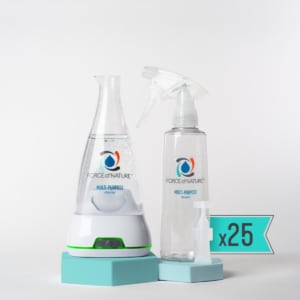
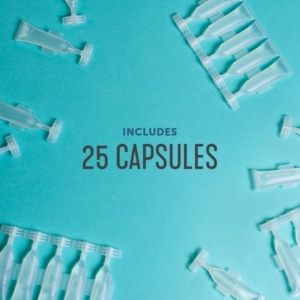
For parents looking for a non-toxic disinfectant safe for baby toys, options are extremely limited. However, Force of Nature is an EPA-registered disinfectant made without harmful chemical fumes or residues and does not require rinsing after use.
That’s why many families use Force of Nature for toys, teethers, and other high-touch baby items as part of a broader approach to non-toxic baby essentials parents actually use.
How often should you clean baby toys?
- Daily: toys that are mouthed often, teethers, and toys used during feeding
- Weekly: toys mostly used on the floor
- As needed: toys dropped in public places, shared with other kids, or visibly dirty
Consistency matters more than overdoing it.
Cleaning different types of baby toys
Hard plastic toys
A gentle, no-rinse cleaner works well for quick wipe-downs throughout the day.
Silicone teethers
Since these spend so much time in babies’ mouths, avoid harsh chemicals and fragrance. Clean frequently and let air dry.
Soft or fabric toys
Check the care label first. Many are machine washable. For spot cleaning, use a gentle cleaner and avoid soaking unless recommended.
Wooden toys
Wood is porous, so avoid soaking. Use minimal moisture, wipe gently, and let air dry completely.
The baby-safe cleaning mindset
Most parents aren’t trying to create a sterile environment. They’re just trying to clean toys often enough without using products they wouldn’t feel good about if their baby immediately put that toy back in their mouth.
If you’re also thinking about wipes and other items that touch your baby’s skin all day, you may want to read how to choose chemical-free baby wipes or explore whether Force of Nature makes sense as a baby registry item.